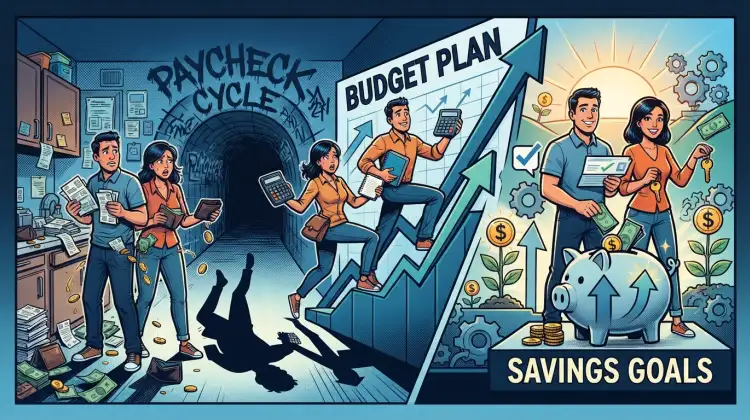
Living paycheck to paycheck means your income is fully committed before it arrives. According to the Federal Reserve's Economic Well-Being of U.S. Households report, a substantial share of American adults say they would struggle to cover an unexpected $400 expense with cash. If that sounds familiar, you are not alone, and the situation is fixable. This guide explains why the paycheck-to-paycheck cycle happens and gives you a concrete sequence of steps to break it — starting with the moves that create breathing room fastest.
Understand What "Paycheck to Paycheck" Actually Means
The phrase covers two different situations, and the fix differs for each. The first is income insufficiency: your take-home pay genuinely does not cover essential expenses like rent, utilities, groceries, transportation, and minimum debt payments. The second is cash-flow timing: your total income is adequate, but bills land before your paychecks do, so you run short mid-month. Many households experience both at once.
Before changing anything, build a simple picture of your money. Write down your monthly take-home pay from all sources, then list fixed costs (rent or mortgage, insurance, loan payments, subscriptions) and variable costs (food, gas, utilities). Use your last two bank statements rather than memory — people consistently underestimate spending. This one exercise tells you whether you are solving a timing problem, an income problem, or a spending problem.
Step 1: Stabilize Cash Flow Before You Budget
If bills and paydays are misaligned, attack that first because it is often the quickest win. Call your creditors and service providers and ask to move due dates to just after your paydays. Utilities, credit card issuers, and many lenders will shift a due date on request, and some allow it through their online account settings. This alone can stop late fees and overdrafts.
Next, address overdraft exposure. Under rules finalized by the Consumer Financial Protection Bureau, large banks must generally offer a low-cost overdraft line of credit or simply decline the transaction rather than charging a high fee. Ask your bank which option applies to you and consider turning off optional overdraft "coverage" — a $35 fee on a $4 coffee is one of the most expensive forms of credit available.
- Align bill due dates with paydays.
- Opt out of expensive overdraft coverage if you can.
- Ask about fee waivers — banks frequently reverse a first-time fee.
- Set up autopay only after you confirm the timing works.
Step 2: Build a Tiny Buffer, Not a Full Emergency Fund
Standard advice says save three to six months of expenses. That is the right long-term goal, but it is unreachable when you are short every month, and aiming for it can feel discouraging. Start with a $500 buffer held in a separate savings account at the same bank so transfers are instant. Even $100 to $300 meaningfully reduces the odds that a small car repair turns into a credit card balance.
Fund it with one-time moves: sell unused items, redirect a tax refund, or set a recurring $10 to $25 transfer for the day after each paycheck. Automating a small amount beats relying on willpower. Once the buffer exists, protect it — it is for emergencies, not sales.
Step 3: Find Margin in the Big Three Expenses
Small cuts feel productive but rarely change the math. Focus on housing, transportation, and food, which typically dominate a US household budget.
Housing
Housing is the largest lever. Options include negotiating a renewal, taking in a roommate, or — if your lease is ending — relocating to a lower-cost unit. Even $150 a month is $1,800 a year.
Transportation
If you carry a car loan with a high rate, get quotes for refinancing from a credit union. Review insurance annually; premiums vary widely for identical coverage, and bundling home or renters insurance often lowers both.
Food
Plan meals around store sales and set a weekly grocery cap in cash or a separate debit account. Dining out is usually the variable that quietly absorbs the margin.
Also audit recurring subscriptions and check whether you qualify for benefits you may be missing, such as the Supplemental Nutrition Assistance Program (SNAP), the Earned Income Tax Credit, or utility assistance through the Low Income Home Energy Assistance Program (LIHEAP). These programs exist for working households, not only for those who are unemployed.
Step 4: Handle Debt and Income Deliberately
Once you have a buffer and some margin, tackle high-interest debt. List every balance with its interest rate. Pay minimums on everything, then direct extra money to the highest-rate balance first — the avalanche method — which minimizes total interest. If your credit score has improved, ask issuers for a rate reduction or look into a 0% balance transfer offer, reading the fee and promotional period carefully.
On the income side, treat raises, bonuses, and side work as tools rather than windfalls. Direct at least half of any new income to the buffer or debt before lifestyle spending absorbs it. If your budget shows a genuine shortfall after cutting, the answer is more income: overtime, a shift change, or a part-time role. That is a legitimate strategy, not a failure.
Where to Get Free Help
You do not have to figure this out alone. Nonprofit credit counseling agencies affiliated with the National Foundation for Credit Counseling offer low-cost or free budget reviews and debt management plans. The CFPB's website provides free budgeting tools and complaint resources. Many employers offer an employee assistance program with financial counseling at no cost, and local libraries and community organizations run financial literacy classes.
What to Remember
Breaking the paycheck-to-paycheck cycle is a sequence, not a single decision. First diagnose whether the problem is timing, spending, or income. Then align bills with paydays, build a small buffer, cut the big three expenses, and attack high-interest debt — in that order. Progress compounds: a $500 buffer prevents the next crisis, and preventing one crisis creates the margin to save more. Small, automated, consistent steps beat dramatic overhauls that collapse in a month.