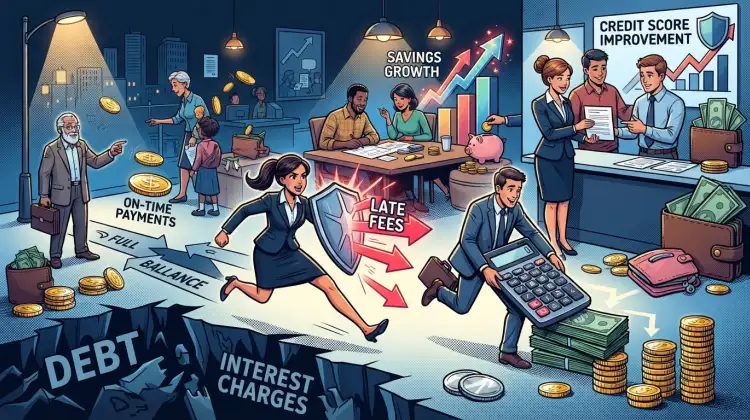
Your credit score is a three-digit number that lenders use to predict how likely you are to repay borrowed money on time. In the United States, most scores range from 300 to 850, and a higher number generally means better odds of approval and lower interest rates. This guide explains what goes into the score, what the ranges mean, and the practical steps that actually move the number.
What a Credit Score Actually Measures
A credit score is a statistical summary of the information in your credit reports from the three major bureaus: Equifax, Experian, and TransUnion. It does not measure your income, your savings, or your worth as a person. It estimates risk based on how you have handled credit in the past.
Two scoring models dominate the US market. FICO scores are used by the vast majority of lenders for mortgage, auto, and card decisions. VantageScore is a competing model used by many lenders and offered free through consumer tools. Both use similar underlying data but weigh it differently, so your score can vary by model and by bureau.
You are entitled to one free report every 12 months from each bureau through AnnualCreditReport.com, the official site authorized by federal law. Checking your own reports does not hurt your score.
How the Score Is Calculated: The FICO Factors
FICO publishes the general weighting of its base score, which gives a useful map of what matters:
- Payment history (35%): Whether you pay on time. A single 30-day late payment can ding your score, and the impact fades over time.
- Amounts owed (30%): How much of your available revolving credit you are using. This is the fastest lever most people can pull.
- Length of credit history (15%): The average age of your accounts and how long each has been open.
- Credit mix (10%): A blend of revolving accounts like cards and installment loans like auto or student loans.
- New credit (10%): Recent applications and newly opened accounts, including hard inquiries.
VantageScore weights these categories somewhat differently and emphasizes total debt and recent behavior, but the practical advice is largely the same.
What the Score Ranges Mean
FICO breaks its range into tiers that lenders use as rough guides:
- Exceptional (800–850): Best pricing and easiest approvals.
- Very good (740–799): Strong position for most loans.
- Good (670–739): Solid, though you may not get the lowest advertised rate.
- Fair (580–669): Approvals possible but often at higher cost.
- Poor (300–579): Limited options; expect deposits or higher rates.
Mortgage lenders often use specific thresholds. For example, Fannie Mae and Freddie Mac generally require a minimum score of 620 for conventional loans, while FHA loans can go lower with compensating factors. The difference between a 640 and a 760 on a 30-year mortgage can add up to tens of thousands of dollars in interest.
How Utilization Quietly Drives Your Score
Credit utilization is the balance you carry divided by your total credit limit. If you have a $5,000 limit and a $1,500 balance, your utilization is 30%. Scoring models generally reward lower utilization, and many consumers see improvement by keeping it under 30% and ideally under 10%.
Utilization is recalculated each time your issuer reports to the bureaus, usually once a month. That means paying down a balance before the statement closing date can lower the balance that gets reported, even if you pay in full by the due date. This is why utilization is the quickest score factor to change.
Practical Steps to Improve Your Credit
- Set up autopay for at least the minimum. Payment history is the largest factor, and a single missed payment can cost you for years.
- Pay down revolving balances. Target utilization below 30%, then below 10% if you can.
- Ask for a credit limit increase. A higher limit lowers your utilization ratio without changing your spending, though it may trigger a soft or hard inquiry.
- Dispute errors on your reports. A 2021 study by the Federal Trade Commission found that roughly one in five consumers had an error on at least one credit report. Correcting inaccuracies can raise your score.
- Limit new applications. Each hard inquiry can shave a few points, and several in a short window signal risk. Rate shopping for a mortgage or auto loan within a focused window is typically treated as one inquiry.
- Keep old accounts open. Closing your oldest card shortens your history and reduces total available credit.
If you are rebuilding from a thin or damaged file, a secured credit card or a credit-builder loan can establish positive history. Use them lightly and pay in full.
Common Myths Worth Dropping
Checking your own score is a soft inquiry and does not lower it. Carrying a balance does not help your score; paying in full is better. And closing a card you no longer use can hurt more than it helps. Also note that employers and landlords typically see a version of your report that excludes your score, and insurance scores are separate models.
What to Remember
Your credit score is a risk snapshot built from payment history, utilization, account age, credit mix, and new applications. The two biggest levers are paying on time and keeping balances low relative to your limits. Check your reports free through AnnualCreditReport.com, fix errors, and give improvements a few billing cycles to show up. Small, consistent habits matter more than any single trick.